Catch the Bad Review Before It Happens
Most bad reviews come from customers who'd have told you directly if you'd asked while they were still holding the food — plus the honest truth about review gating.
Food Truck or Restaurant Owner? Sign up for the Culinary Entrepreneur Newsletter!
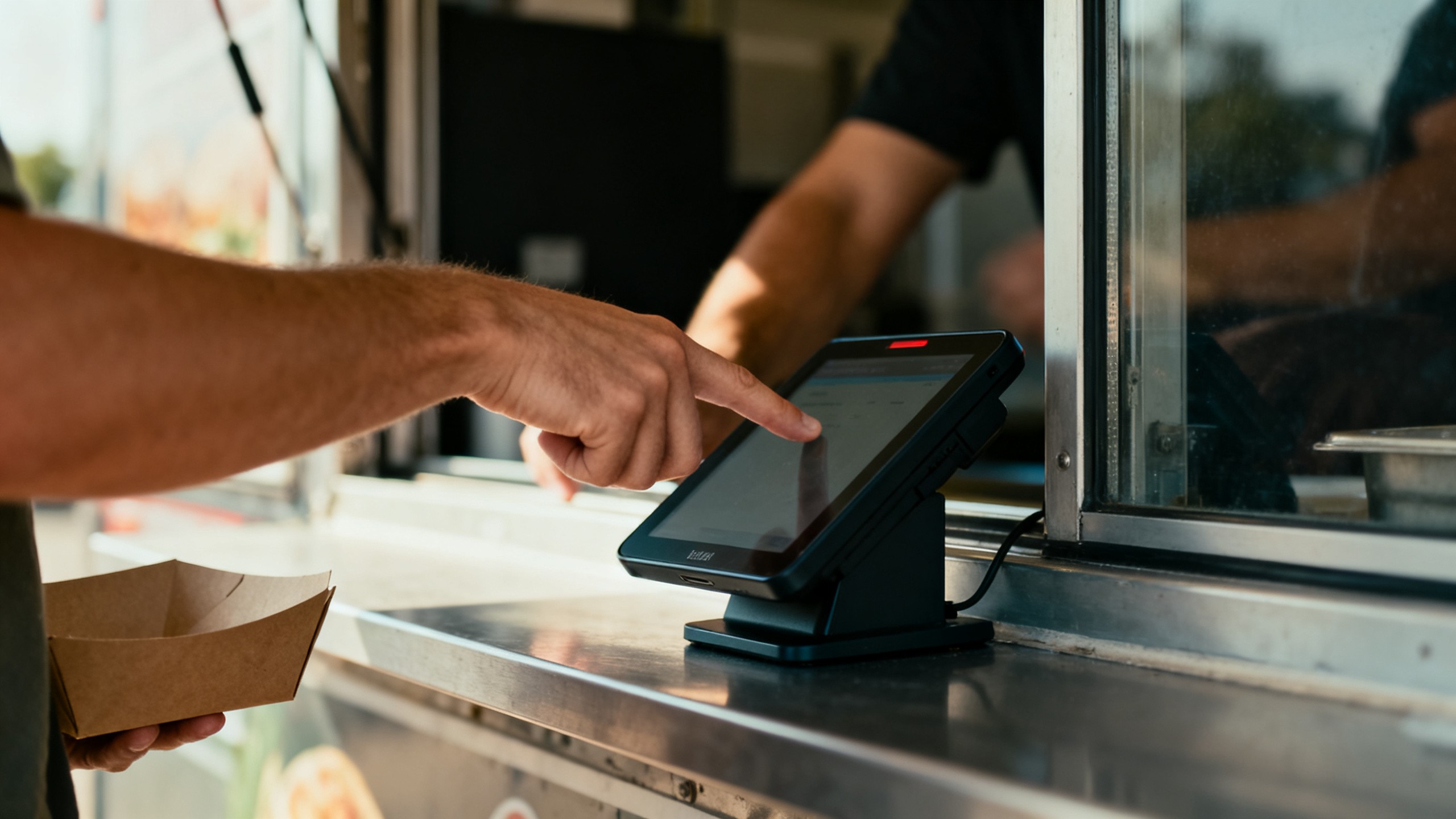
Most bad restaurant reviews are written by people who would have told you the problem directly if you'd asked them while they were still holding the food. You didn't ask. So they went home, got annoyed again thinking about it, and told 3,000 strangers instead.
Reputation management isn't responding well to reviews. That's damage control, and by the time you're doing it the damage is public and permanent. The actual job is collecting feedback at the moment of the experience, so the unhappy version reaches you privately and the happy version reaches the internet.
Why asking at the moment changes the outcome
Two things are true about an annoyed customer thirty seconds after a bad experience:
They haven't decided it's a story yet. The burrito was cold. That's a fact, not yet a grievance. Nobody's written anything, told anyone, or formed an opinion about your restaurant as a whole.
And they're still in a position where you can fix it. A cold burrito can be remade in four minutes. A one-star review about a cold burrito cannot be remade at all — you can reply to it, and every future customer reads your reply next to the complaint, forever.
The gap between those two states is about twenty minutes. Everything in reputation management is about getting a question in front of the customer inside that window.
The happy-face, sad-face question
The mechanic that works is embarrassingly simple: after the order, one question with two answers. A happy face and a sad face. Not a five-star scale, not a survey.
Simple matters more than it sounds like it should:
Two options get answered. A ten-question survey gets answered by nobody except people who are furious, which poisons your data.
It takes one tap. You're competing with walking out the door.
It sorts people, which is the actual point. You don't need a score. You need to know which bucket someone is in, because the two buckets should get completely different follow-ups.
Then the two paths diverge:
Sad face | Happy face | |
|---|---|---|
What the customer sees | A short "what went wrong?" — reasons to pick from, and a box to type in | A thank-you and an invitation to leave a public review |
Where it goes | Straight to the owner or manager as a notification, and saved against that order | Google, Yelp, or wherever you're building reviews |
What you do with it | Reach out same day if you can, and fix the pattern if it repeats | Nothing — get out of the way |
Why it matters | A complaint you can answer privately instead of publicly | Reviews from people who are actually happy, captured while they still are |
The detail that makes the negative path useful is tying the feedback to the order. "Someone was unhappy on Tuesday" is not actionable. "This specific order, at 7:42pm, these items, this employee on the window, and they said the fries were cold" is a thing you can actually go fix. When the same reason shows up eleven times in a month, you've stopped doing reputation management and started doing operations — which is where the real money is.
The honest problem with only asking happy people
Here's the part the software companies selling this don't put on the pricing page, and I'd rather you hear it from me.
Showing the Google review link only to customers who tapped the happy face is called review gating, and Google's review policies take a dim view of it. The policy position is that you shouldn't selectively solicit reviews from customers you expect to be positive while discouraging or diverting the ones you expect to be negative. Enforcement is inconsistent, plenty of vendors sell exactly this, and reasonable people argue about where the line sits. But it isn't a settled, obviously-fine practice, and anyone who tells you it is hasn't read the policy.
Yelp is stricter still: Yelp asks businesses not to solicit reviews at all, from anyone, and has been public about penalizing businesses that run review campaigns. Pointing happy customers at Yelp specifically carries more risk than pointing them at Google.
What's clearly defensible:
Ask every customer for feedback. Same question, same prompt, no filtering on the way in.
Make the public review option available to everyone. Including the person who tapped the sad face. If they want to say it publicly, that's their right, and trying to prevent it is the part that's actually a problem.
Act on the private feedback fast. The legitimate reason fewer bad reviews get written is that you fixed the problem, not that you hid the link.
Never reward a review. No free drink, no discount, no entry into a drawing, ever. Incentivized reviews violate Google's policies outright and can get your reviews stripped or your listing penalized. Rewarding someone for a tagged photo or for joining your text list is fine. The review itself has to be unpaid. We got to 800 Google reviews in six months without incentives, and I'd do it that way again — it's not worth the risk and it isn't necessary.
My honest read: the value here was never the gating. It's the private channel. Most operators have no idea why unhappy customers are unhappy, because unhappy customers don't complain — they just don't come back. A same-day notification that something went wrong on a specific order is worth more than a slightly better star average, and it's worth more precisely because you can act on it.
What to do with a sad face when you get one
Fast and boring beats clever:
Respond the same day. Same hour if you can. Speed is most of the apology.
Don't argue, even when you're right. You're not in a dispute, you're in a retention problem.
Fix it concretely. Remake it, refund it, or invite them back with something specific. Vague goodwill isn't a fix.
Tell them what changed. "You were right, we've moved the fry station" turns a complainer into someone who feels heard.
Count the reasons monthly. One cold burrito is noise. Nine in March is a process problem with an address.
That last step is the one that pays. Individually, complaints feel like bad luck. Counted, they point at a shift, a station, a menu item, or a person — and they're the cheapest operational research you will ever get, because the customer did the work for free.
The honest caveat
This doesn't stop bad reviews. It reduces the ones caused by fixable service failures, which is a meaningful share but nowhere near all of them. People will still review you badly because they didn't like the food, because parking was hard, or because they were having a bad day. Some reviews aren't about you at all.
It also won't help if you don't act on what comes in. A feedback system that routes complaints to an inbox nobody reads is worse than no system, because you've now asked someone to tell you their problem and then ignored it. That's a second, larger insult.
And it won't build a review count on its own. Volume comes from asking consistently, at the window and on the receipt, for months. The feedback prompt helps you ask the right people. It doesn't replace asking.
Where doing this by hand breaks down
You can do a version of this with a printed QR code and a free form. Genuinely — that's better than nothing and it costs you an afternoon.
What breaks is the connection to the order. A form submission tells you someone was unhappy. It can't tell you which order, which items, which time, or which employee, so you get a sentiment and no lead. You also have to remember to check it, the responses pile up unread, and nobody gets notified when something goes wrong tonight.
The version that works has to be attached to the transaction and has to push at you rather than wait to be checked.
In Avocado, the feedback prompt is part of the order flow: a happy or sad reaction is saved against the specific order with the customer's reasons and their note, a negative reaction notifies the people you've designated to receive them, and a positive one can show a link to your Google or Yelp page — with a count of how many customers actually clicked through, so you can tell whether it's doing anything. You choose the review URL, and leaving it blank turns that half off entirely.
Avocado is a POS built for independent restaurants and food trucks. We're operators first, and we'd rather tell you the honest version than the version that closes faster.
This is operator experience, not legal advice. Google's and Yelp's review policies change and are enforced unevenly — read the current policies yourself before you configure review prompts, and talk to a lawyer if you're unsure. Nothing here should be read as a recommendation to gate, filter, or incentivize reviews.